Price Controls Would Be Menacing to America
Price controls are back! They're back on the front pages of newspapers and home pages of media outlets everywhere, at least. One would have thought we'd have nipped this once noncontroversial topic in the bud after decades of price control attempts followed by their catastrophic failures. But now, as what seems to be Kamala Harris' first policy platform she's running on, price controls and the breadlines that come with them are front and center again.
The claim by Harris is that food inflation right now is so extreme because Big Grocery has taken this opportune moment in a highly sensitive economic environment to drum up as much profit as they can. Big Grocery is using price gouging in order to pad their pocketbooks all while taking advantage of the consumer, so we're told.
Price controls, proposed this way, always sound great. Who doesn't want to stop big names from taking advantage of average Americans? Anyone can get behind that! Unfortunately for Harris, price controls are a Trojan House. Innocent on the outside, but disaster awaiting on the inside.
Economic technicals simply do not back up the proposal to establish new price controls. Nor have the technicals ever worked properly in history.
But, let's back up for a minute.
What are prices and price controls?
First, we should understand the concept of a "price." In the most simplest terms, a price is the monetary value assigned to a good or service by the seller. This could be a store like Walmart saying that a toy construction truck is $5 or a company like Ernst & Young quoting $5,000 for a standard financial audit for a small business.
"Market price" gets a little bit more complicated. This is the process where the buyer pays the seller an amount of money for a good or service. What the buyer pays and what the seller is willing to take is known as the market price. In other words, this market price that the buyer pays, however, is determined by the supply and demand of that product or service.
An "administered price" or price control is when governments intervene in the markets and tell private companies what minimums and maximums they must sell their products for. This is otherwise known as a price floor or price ceiling, respectively. In this, they are no longer market prices, but are administered prices because the governing body set the price.
Depending on the objective of the administered price, a governing body will typically say something along the lines of, "Hey Gas Company, you can sell a gallon of gas for a minimum of $2.75, but not any lower." or "Hey Gas Company, you can sell a gallon of gas for a maximum of $4.00, but not any higher."
Price controls often have good intentions, but because of how economics work, and how people react or respond to economics, they typically have catastrophic affects.
In a free market like we have in America, a market price will rise based on the explanation above: the shift between supply and demand. In order for a business to be profitable in a free market--and for its literal survival as a company--they must set a price that:
- A consumer (you or I) are willing to pay.
- Cannot be easily undercut, or at least, cannot be undercut to a noticeable level that would motivate the buyer to go to another seller for the cheaper price.
Because of these free market forces that we have broadly lived under for many years, it is often difficult for a company to price gouge a consumer--unless a monopoly exists--because another seller will come along and offer the same or a similar good for a lesser price than the price gouger.
In that scenario, the price gouger then has to undercut itself and set a new price in order to stay in business. After all, no one will buy the good or service at the higher price when an identical or similar product exists at another seller for a lower price. And on and on this behavioral cycle goes.
This very foundation of how our economy works in America is at complete odds with Kamala Harris' claim that grocers and food producers are price gouging consumers. It just doesn't exist.
But, for the sake of Harris' argument, let's assume price gouging is rampant under our economy, followed by a Harris administration that is successful in implementing price controls in food and grocery industries.
What would price controls do to an American economy?
A significant portion of economics is the behavioral response to changes and fluctuations in price. This has been the case since the dawn of time and will not change. And so, a behavioral response is just what will happen when a price control is implemented.
Under the free market, an apple may be sold under the below variables.
Apple - (Market Price)
Cost to purchase from supplier: $0.50
Cost to ship to grocer: $0.45
Wage paid to grocery stocker for apples: $1
Total cost: $1.95
Market selling price: $4.00
After a total cost of $1.95, a grocer will earn $2.05 off of the apple on a $4 sale price. They will use this this leftover margin to pay for overhead, such as rent, electricity, running water, plumbing, etc. And after bills are paid, the grocer will earn a net profit of $0.03 for its efforts, based on an average 1.5% industry average profit margin. [1]
This scenario looks a little different when the government sets an administered price on what the apple can be sold for. Let's say, theoretically, they set a price ceiling that does not allow the apple to be sold above $2.50.
Apple - (Administered Price)
Cost to purchase from supplier: $0.50
Cost to ship to grocer: $0.45
Wage paid to grocery stocker for apples: $1
Total cost: $1.95
Administered selling price: $2.25
After a total cost of $1.95, a grocer will earn $0.30 off of the apple on the $2.25 administered sale price. They will use this this net margin to pay for overhead, such as rent, electricity, running water, plumbing, etc. And after all the bills are paid, the grocer will earn, well, next to nothing.
In fact, based off of a scenario like this, the grocer may decide not to carry apples anymore, because there's no profit to be made. And after overhead, they'd likely even be selling the apples at a loss. Like any sensible person, they'd take apples off the shelves because the grocer isn't in the business of losing money.
This is just what would happen if the government started regulating other grocery items, too. You'd likely not see many of your favorite brands or goods in the store anymore, because the grocer won't sell them at a loss. They won't even bring them to market in the first place, because there is no money to be made.
There are real examples of price fixing throughout history that have caused shortages and poor selection of products available to the consumer as well. We have decades of consequences to price controls to learn from.
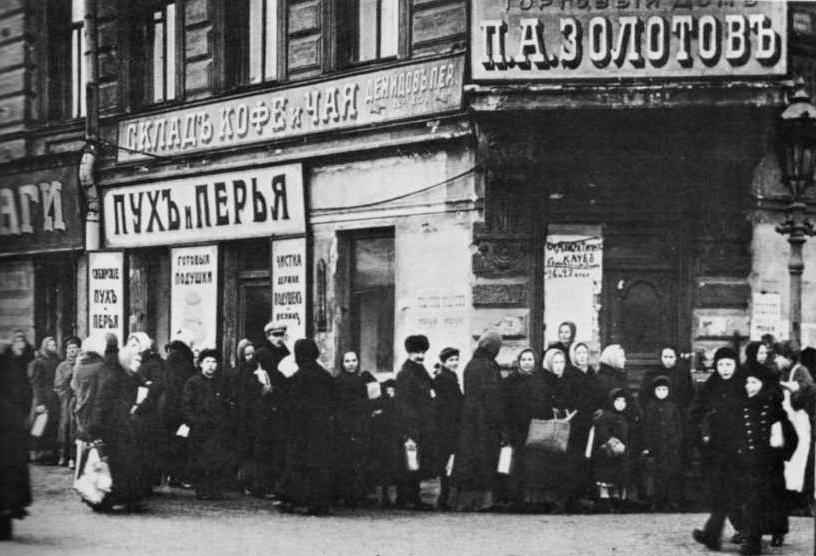
During the Stalin years, Russia kept strict price controls in place at state stores. It certainly kept prices down. But while low prices may have been found at state stores, these stores dealt with extreme shortages and little variety in selections [2]. But due to the government's intervention, production was only sensitive to the government's will, not what was reflected in the market by consumer demand.
Price controls had disastrous effects even as recent as the 1970s, causing gas lines and panic buying in the United States. "President Nixon instituted price controls for oil beginning in 1971 as part of a large program controlling prices. These actions led to oil shortages in 1971 and 1972 and long lines for gasoline in 1972," writes Christopher Knittel in Tax Policy and the Economy. [3]
Based on history, and plenty of examples available to us, it's clear that price controls lead to shortages, and then, breadlines. Upon implementation of such a policy, average Americans would find themselves in the same situation people throughout history have.
Feel good policies to solve problems that don't exist
Price controls are feel-good policies that have catastrophic affects in the real world. They are flowery and may be good for motivating voters that are "tired of being taken advantage of," but all it does is place that anger in the wrong place.
It doesn't even solve inflation, because inflation right now is largely supply-side. Price controls, as they are being talked about, only pull demand-side levers.
These policies proposed will only hurt, not help, the average American.
[1] https://www.fmi.org/our-research/food-industry-facts/grocery-store-chains-net-profit
[2] https://academic.oup.com/restud/article-abstract/8/3/143/1589045?redirectedFrom=fulltext&login=false
[3] https://www.journals.uchicago.edu/doi/full/10.1086/675589#:~:text=Prior to the oil embargo,lines for gasoline in 1972